Showing posts with label Amenhotep III. Show all posts

Wednesday, November 20, 2024

Ancient History - Part 54: Egypt's Last Stand


Even whilst confusing the growing hostile activity throughout the neighboring Phoenician region as guesswork between Minoan, Philistine, Semitic, or a new tribesfolk, the Empire of the Nile would not sit quietly. The rise of piracy instituted a culture of mercenary versus pirate with Egypt maintaining these independent units via payment of her own treasury, which led to frequent deadly confrontations.

Despite the growing tensions brought by the great movements of people during the 15th century, the Egyptian pharaohs did not place blame for these incursions upon a single nation. Thutmose IV warmly regarded Crete and any gifts from the West as tribute, interpreting such gestures as being honored for his own prestige. He kept his forces away from Crete's shores even as the Minoans opened trade with the Phoenicians, particularly the princes of Syria.

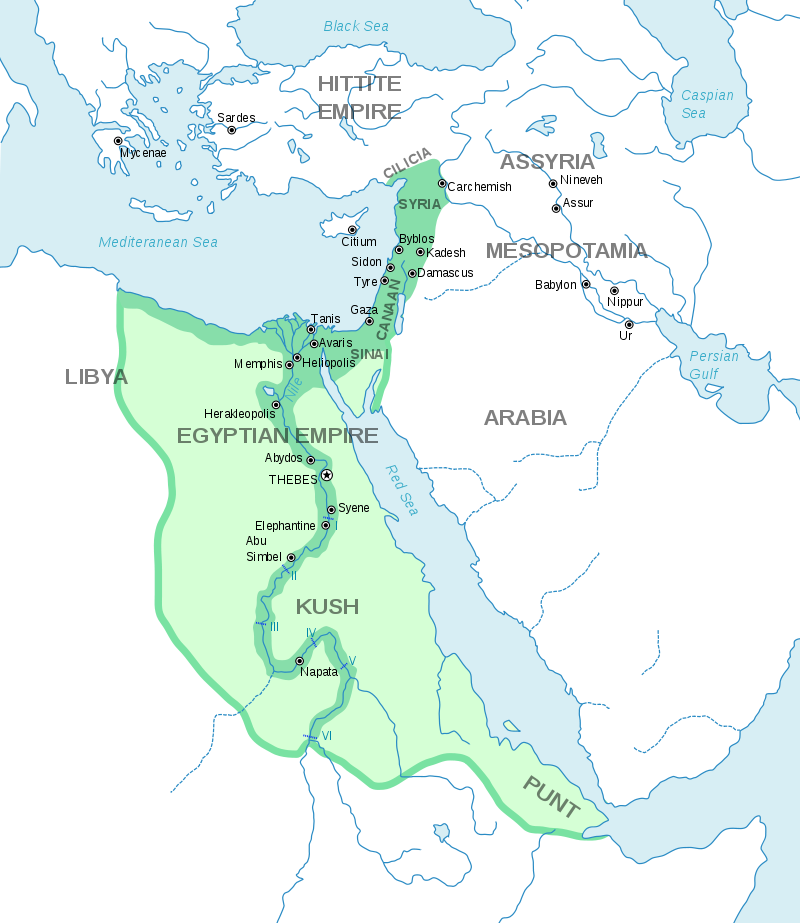
Amenhotep III also chose not to escalate military engagement with the Sea Peoples but, unlike his predecessor, made attempts to properly identify the indistinguishable cultures, to middling results. Customs, culture-wear, language, and racial characteristics were still commonly confused amongst the maritime foreigners flooding into the region.

It wasn't for roughly two hundred more years (1194 BC) that the first Egyptian pharaoh (Ramses III) directly engaged these sea-tribes. In a series of violent clashes, the Egyptian military fought against free Vikings, rival Aegeans, and other freefolk amongst the Phoenician states. Mainly the fight for control of the Mediterranean coasts was of a prime interest to the Egyptian king, and at the height of this war led to Ramses' massively successful defeat of the Sea Peoples' migrant army deep within the Serbonian Bog.

On the side of Egypt was their lone ally the Tursha and the opposing side, the barbarian hordes encompassing bits and pieces of all the mixed cultures who represented a culmination of Egypt's centuries-long disdain. With this migrant army thoroughly destroyed on the Nile's marshland, Egypt stated her objective to defend her borders, along with the nearby coasts of the Near East, though this strong posture would ultimately arrive too late.

Mass migration is always tough. It is an issue met with resistance whether the host nation's leader tasked with dealing with it intends to act or not act. But the reality is that there is only a short window of opportunity, early on, that requires hardline action before things get too hot. This is primarily due to it being a far easier task in defending borders against foreign invaders than to later expel countless semi-assimilated migrants from within, after the fact, when the possibilities for damaging scenarios to the host country or kingdom are limitless.


[RAMSES III - Defender of the realm]


Wednesday, August 28, 2024

Ancient History - Part 44: An Empire At Its Peak


Upon the defeat of prince Aki-izzi's league of Semitic and Harri rebels, Shubbiluliuma next turned his conquest toward central Syria, occupied and controlled by the Amorites. Much like northern Syria had Aleppo as its crown jewel, central Syria bore Kadesh, the most prestigious power center of the region, and the Hattic king reasoned that should it fall, the surrounding areas would be quick to follow. A theory that proved correct.

With the success of his Campaign of Syria thus far and central Syria fallen, Shubbiluliuma knew that there were greater riches extending beyond Syria, whose resources were quite matched in wealth and would see grand results in the eventual trade from it that would follow the war. The most fertile lands that he eyed with a hunger, lay southward, the lands of Aziru (Lebanon) and Palestine, specifically.

Syria, Aziru, and Palestine are collectively known as the Fertile Crescent, an area desired throughout history by many competing powerful kingdoms.

According to the Amarna letters, Shubbiluliuma's forces overwhelmed and defeated the remaining Amorite regions of Syria with ease, but once it came time to annex Aziru, were met by a fiercely unexpected resistance. Be it city-street or countryside, the defenders, though few, simply would not surrender. Despite his heightened interest in conquering the former Egyptian-satellite nations, upon Aziru's eventual submission (and compliance to a heavy monthly tribute that would lessen over time), the Hattic king ended his conquest here.

In the aftermath of the Hittite Empire's violent expansion, two empires now encroached upon the other. Hatta and Egypt. This was a most sensitive political situation and the first instance in a span of many years when two superpowers of the Near East directly bordered the other in such a confrontational manner.

The Hattic king treated with the Egyptian Pharoah and the battlefield changed from a clash of swords to a conversational war of words. Perhaps heated at first, in the end, Shubbiluliuma and Amenhotep III signed a peace treaty. Hatta would retain control over Aziru whilst Egypt would retain control over Palestine, and neither empire would take arms against the other, as far as both monarchs ruled.

And while all agreements prove temporary over time, neither side challenged the limit of the treaty, with much to gain from mutual obeyance. The Hittite forces bore wartime exhaustion and the Egyptian empire was in a state of rapid decline which extended to the waning size and scope of their once mighty military. For a lengthy period, the security measures were respected by both nations, peace terms held intact.


[LETTER BETWEEN EGYPT AND AZIRU]


Sunday, September 3, 2023

Ancient History - Part 4: Uneasy Peace


Despite peaceful relations with Assyria and Babylon, Egypt mounted a continuous Palestinian campaign. Under the rule of Amenhotep II (1447-1420), the empire of the Nile quelled any civil unrest, amongst the rebellious Semitic people, before moving its armies back into the lands of Syria. While this march was no more than a nominal success, the Mitanni (the westward neighboring state to Assyria) suffered great losses which resulted in a significant displacement of their power and people. So much harm did the Mitanni sustain, that it left them in no other position than to plead for the mercy of Ra's chosen people.

Amenhotep II's successor, Thutmose IV (1420-1411), believed that if the Mitanni could be cooed into friendly terms, much like Babylon and Assyria, there was untapped potential in securing a third subordinate ally. Therein lay the predicament: The king of the Mitanni, Artatama I, was already fiercely befriended and trusted by the Hittites, the chief rival of Egypt. Even though by mid-15th century B.C., war between the Egyptians and the Hittites had been generally reduced to mild skirmishes (upon Syrian soil), tensions continued to boil, and each passing day both sides expected grand-scale battle to resume.

The Egyptian king thusly proposed a royal marriage between kingdoms. Thutmose IV would marry Artatama's daughter, a symbol of protection, one that accompanied the trust that Egypt would harbor no further attack upon the Mitanni any longer, but such a promise would warrant a step even further. Egypt allowed the Mitanni to enter the fold of its vision. With a single marriage, a shockwave rumbled throughout the Near East. The Mitanni's allegiance officially shifted from the Hittites to the Egyptians.

This new development did not rest easily with the two nations of Assyria (ruled by Ashur-bel-nisheshu) and Babylon (ruled by Kara-indash). Unlike his predecessors, for Thutmose IV, the Mitanni were now quickly becoming the Egyptian king's his favored state, or so it appeared.

The two rulers east of the Euphrates agreed upon one thing: Despite any ill-bearing or mistrust they'd once harbored for the other, it must all be set aside, in order to form a united defensive front, should any attack, no matter whom the would-be conquerors be, be led. 

Assyria began refortifying its towns and their city of Ashur, strictly insuring that no weak points existed amongst the battlements. Meanwhile, the Kassites of Babylon were in a state of constant patrol along the borders. 

However, these expectations of a pending defensive war were all for not. Thutmose IV passed away (1411) and his successor, Amenhotep III (1411-1375), immediately sent envoys to treat with Babylon and Assyria. This new king made his intentions well-known; he possessed no desire to expand into the northern mountains of Assyria nor the vast lands eastward into Babylon. He'd admired their nations as loyal subjects and wished to maintain a focus wholly upon the true sources of Egypt's discontent, the unending Palestinian and Syrian wars, respectively.

Amenhotep III's assurances did not go unchallenged by both Ashur-bel-nisheshu and Kara-indash, and when pressed for further explanation, he convinced them that the Egyptian people were a culture well-conditioned to the dry lands of the desert heat. They were not groomed for a cold wintry life in the mountains, pacifying the argument justifying Assyria's fear of the Egyptians as would-be conquerors of their land. When it came to Babylon, Amenhotep stated that the Euphrates River was an unmistakable natural boundary, and officially declared that Egypt would never expand beyond it.

At the conclusions of these entreaties, all sides departed. Satisfied.