Showing posts with label Semitic people. Show all posts

Wednesday, January 8, 2025

Ancient History - Part 59: The Philistine Confederacy


Caphtor is frequently mentioned in the ancient inscriptions of Egypt and Syria as well as the Hebrew Bible and is purported to be the original homeland and locality of the Philistines. There is much discourse in the relation between the Cretans, Minoans, and Philistines in regards to Caphtor, as all three groups appeared to have occupied the region, at times simultaneously. 

Egypt commonly referred to those native born to Crete or Cyprus as Minoan and their migrant populations later recognized as Keftian. Both groups therefore migrated to Caphtor to adopt the lifestyle and ways of the Philistines who thereby ruled it. The language of the Philistine lands was maintained as Semitic, despite a continual influx of migrants who entered via Palestine’s coasts.

Upon the Philistines overtaking of Gaza City, the grand temple converted to worship their sea-god, Dagon, the very head of their pantheon. According to the Bible, the Philistine temples whose construction followed were massive in size and scope. They adopted the architectural design of the Babylonians and Egyptians, with the exception of leaving massive open theater areas that were commonly used for gladiatorial combats of amusement, especially in the case of the palaces.

Some of the ruthless sporting events included boxing and bull-grappling. Unlike sports of today, most outings comprised of participants forced to challenges resulting in death, much to the delight of the onlookers. Suffice it to say, the losers did not return home with their tails between their legs, in fact, they likely didn't return at all.

Beneath the roofs of these structures, heads numbering amongst a thousand or more could move freely within, whether gathered together for the purpose of worship, festivity, or political discourse. With the Cretan, Minoan, and Semitic peoples all dwelling in this region, it was well over a century that the Philistines enjoyed significant rule over the region until the rise of David and his Kingdom of Israel came to fruition.


[KEFTIAN CAPTIVE of Egypt during the 1200s BC]


Wednesday, November 20, 2024

Ancient History - Part 54: Egypt's Last Stand


Even whilst confusing the growing hostile activity throughout the neighboring Phoenician region as guesswork between Minoan, Philistine, Semitic, or a new tribesfolk, the Empire of the Nile would not sit quietly. The rise of piracy instituted a culture of mercenary versus pirate with Egypt maintaining these independent units via payment of her own treasury, which led to frequent deadly confrontations.

Despite the growing tensions brought by the great movements of people during the 15th century, the Egyptian pharaohs did not place blame for these incursions upon a single nation. Thutmose IV warmly regarded Crete and any gifts from the West as tribute, interpreting such gestures as being honored for his own prestige. He kept his forces away from Crete's shores even as the Minoans opened trade with the Phoenicians, particularly the princes of Syria.

Amenhotep III also chose not to escalate military engagement with the Sea Peoples but, unlike his predecessor, made attempts to properly identify the indistinguishable cultures, to middling results. Customs, culture-wear, language, and racial characteristics were still commonly confused amongst the maritime foreigners flooding into the region.

It wasn't for roughly two hundred more years (1194 BC) that the first Egyptian pharaoh (Ramses III) directly engaged these sea-tribes. In a series of violent clashes, the Egyptian military fought against free Vikings, rival Aegeans, and other freefolk amongst the Phoenician states. Mainly the fight for control of the Mediterranean coasts was of a prime interest to the Egyptian king, and at the height of this war led to Ramses' massively successful defeat of the Sea Peoples' migrant army deep within the Serbonian Bog.

On the side of Egypt was their lone ally the Tursha and the opposing side, the barbarian hordes encompassing bits and pieces of all the mixed cultures who represented a culmination of Egypt's centuries-long disdain. With this migrant army thoroughly destroyed on the Nile's marshland, Egypt stated her objective to defend her borders, along with the nearby coasts of the Near East, though this strong posture would ultimately arrive too late.

Mass migration is always tough. It is an issue met with resistance whether the host nation's leader tasked with dealing with it intends to act or not act. But the reality is that there is only a short window of opportunity, early on, that requires hardline action before things get too hot. This is primarily due to it being a far easier task in defending borders against foreign invaders than to later expel countless semi-assimilated migrants from within, after the fact, when the possibilities for damaging scenarios to the host country or kingdom are limitless.


[RAMSES III - Defender of the realm]


Wednesday, November 13, 2024

Ancient History - Part 53: The Innocence Of The Minoans


There is much in the way of confusion when it comes to identifiers and datapoints regarding the cultural histories between the differing Mediterranean seafaring peoples, particularly during their great migrations into Asia Minor. Often, aggressive acts of piracy that plagued Egypt were mistaken as Minoan (Crete) in nature instead of Mycenaean. It was commonplace for Egypt to mistake newly established Greek settlements for Philistine settlements, Philistine settlements for Semitic settlements, and so forth.

This situation has thusly created a puzzle box of sorts for contemporary historians to decipher the most likely of tribes in certain situations and events whilst sifting through the occasional erroneous accounts scattered throughout ancient Egyptian record.  The most poignant example is to simply look again between the two ethnically separate Greek nations of the time, the Minoans and the Mycenaeans.

Egypt referenced the term "Northerners" many times and it has been widely interpreted to indicate the Mycenaean-Greeks despite Crete, populated and ruled by the Minoan-Greeks, being geographically another northward contender for the recurring reference.

If "Northerners" refers to the Mycenaean-Greeks then "Keftians" refers to the Minoan-Greek population that dwelled on Crete. Therefore, the Mycenaean-Greeks had the ability of travel-by-sea and the Minoan-Greeks, despite the height of their civilization's peak established during the Middle Kingdom of Egypt's decline, did not. This is not to say that a Minoan or two never departed their isle to the mainland coast of the Levant, but mass migration during this civilization's epoch at the scale of their northwestward neighbors (the Mycenaeans) is widely ruled out as unlikely.

Prior to the rise of Mediterranean piracy, the Minoan civilization had begun to deteriorate (by 15th century BC) marking this newer nautical enemy of the Egyptians as intrinsically Mycenaean-Greek via process of elimination. The "Peoples of the Sea" were never Minoan in nature, did not wear their garb, and it is evidenced that the Minoans actually engaged in fierce skirmishes against them, thwarting invasions from the waters against the very same enemy that would later engulf Egypt's coasts and the adjacent coastlines of Libya and Phoenicia. 

An existential threat to the Empire of the Nile saw the Egyptians lump many differing foreign cultures into the same group, when in fact there were various contrasting tribes who encompassed the invading migrants who first encroached upon their waters and would later infiltrate into her region. It has since been the duty of scholars studying this period to attempt to ascertain the correct correlation and identifications in this steep game of "Who's Who?" ever since.


[MINOAN PALACE - Knossos]


Wednesday, October 23, 2024

Ancient History - Part 52: New Players In Town


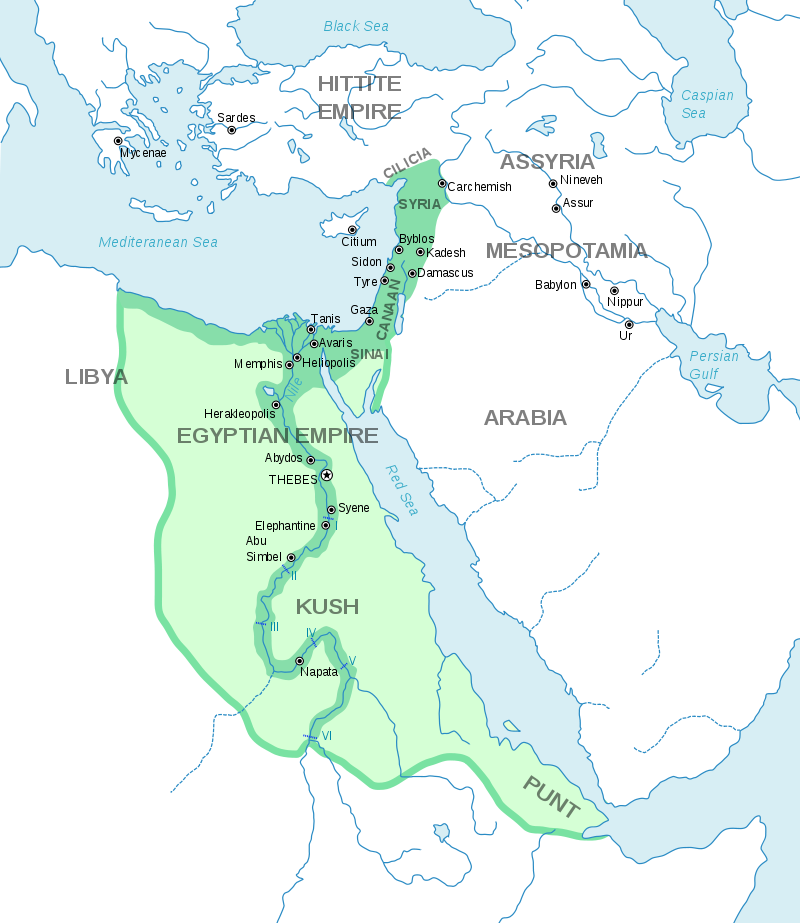
Upon the collapse of the Hittite Empire, the former lands of her domain fell into the hands of the local princes and lords of the Levant region, most notably in the case of the Philistines, who up to that point began to settle in Palestine. The necessary documentation required for this era of recorded history for the events that followed relies largely upon Egyptian reports dating back to 1190 BC.

In addition to the Philistines, the Aegeans, or the Kleftians, as the Egyptians preferred to name the Mediterranean seafaring peoples, began to enter Asia Minor and colonize upon Cyprus and other uncontested coastal shores along Anatolia, Syria, and Lebanon. However contrary to ancient Egyptian presumptions, these were more than merely tribes migrating from what we know as modern day Greece, but tribes also originating from Crete, Sicily, Sardinia, and the rest of modern day Italy. Egypt lumped the "People of the Sea" as Greek in origin, but latter-day historians of the age of Great Britain have since matched the names of several deceased as varying all throughout the Mediterranean.

Egypt was firmly placed into the uncomfortable position of seeing foreigners pushing into the lands she once occupied, yet powerless to oppose the rapid changing of the times. New cultures would dominate and carve out boundaries to establish strong heterogenous states, while the empires of old, would follow into the footsteps of Hatta on the long downhill road towards decay.

Egypt's pharaoh, Ramses III thusly felt obligated to act against these new players in town, but the Philistines eagerly awaited this pending challenge, and his army was met and repulsed by a stalwart force of Philistine defenders. Upon defeating the once-great Egyptian power, the new migration seamlessly integrated vast swaths of territory, pathing the way for other tribes to follow. For the first time in centuries, the Semitic peoples were permitted to establish their own leadership to rule themselves, this valiant stand put on full display as a warning for any future would-be conquerors. 

The Achilles' heel to every empire is a loss on the battlefield to a lesser enemy for all to witness. One could argue that with the defeat of Egypt, the Philistines did not merely claim their independence, but signaled the end of Egyptian polity of the Near East, created by Thutmose centuries earlier, once and for all. 


[THE PHILISTINES as depicted by Egypt]


Sunday, September 3, 2023

Ancient History - Part 4: Uneasy Peace


Despite peaceful relations with Assyria and Babylon, Egypt mounted a continuous Palestinian campaign. Under the rule of Amenhotep II (1447-1420), the empire of the Nile quelled any civil unrest, amongst the rebellious Semitic people, before moving its armies back into the lands of Syria. While this march was no more than a nominal success, the Mitanni (the westward neighboring state to Assyria) suffered great losses which resulted in a significant displacement of their power and people. So much harm did the Mitanni sustain, that it left them in no other position than to plead for the mercy of Ra's chosen people.

Amenhotep II's successor, Thutmose IV (1420-1411), believed that if the Mitanni could be cooed into friendly terms, much like Babylon and Assyria, there was untapped potential in securing a third subordinate ally. Therein lay the predicament: The king of the Mitanni, Artatama I, was already fiercely befriended and trusted by the Hittites, the chief rival of Egypt. Even though by mid-15th century B.C., war between the Egyptians and the Hittites had been generally reduced to mild skirmishes (upon Syrian soil), tensions continued to boil, and each passing day both sides expected grand-scale battle to resume.

The Egyptian king thusly proposed a royal marriage between kingdoms. Thutmose IV would marry Artatama's daughter, a symbol of protection, one that accompanied the trust that Egypt would harbor no further attack upon the Mitanni any longer, but such a promise would warrant a step even further. Egypt allowed the Mitanni to enter the fold of its vision. With a single marriage, a shockwave rumbled throughout the Near East. The Mitanni's allegiance officially shifted from the Hittites to the Egyptians.

This new development did not rest easily with the two nations of Assyria (ruled by Ashur-bel-nisheshu) and Babylon (ruled by Kara-indash). Unlike his predecessors, for Thutmose IV, the Mitanni were now quickly becoming the Egyptian king's his favored state, or so it appeared.

The two rulers east of the Euphrates agreed upon one thing: Despite any ill-bearing or mistrust they'd once harbored for the other, it must all be set aside, in order to form a united defensive front, should any attack, no matter whom the would-be conquerors be, be led. 

Assyria began refortifying its towns and their city of Ashur, strictly insuring that no weak points existed amongst the battlements. Meanwhile, the Kassites of Babylon were in a state of constant patrol along the borders. 

However, these expectations of a pending defensive war were all for not. Thutmose IV passed away (1411) and his successor, Amenhotep III (1411-1375), immediately sent envoys to treat with Babylon and Assyria. This new king made his intentions well-known; he possessed no desire to expand into the northern mountains of Assyria nor the vast lands eastward into Babylon. He'd admired their nations as loyal subjects and wished to maintain a focus wholly upon the true sources of Egypt's discontent, the unending Palestinian and Syrian wars, respectively.

Amenhotep III's assurances did not go unchallenged by both Ashur-bel-nisheshu and Kara-indash, and when pressed for further explanation, he convinced them that the Egyptian people were a culture well-conditioned to the dry lands of the desert heat. They were not groomed for a cold wintry life in the mountains, pacifying the argument justifying Assyria's fear of the Egyptians as would-be conquerors of their land. When it came to Babylon, Amenhotep stated that the Euphrates River was an unmistakable natural boundary, and officially declared that Egypt would never expand beyond it.

At the conclusions of these entreaties, all sides departed. Satisfied.