Tuesday, October 31, 2023

Ancient History - Part 10: The Crux of Power


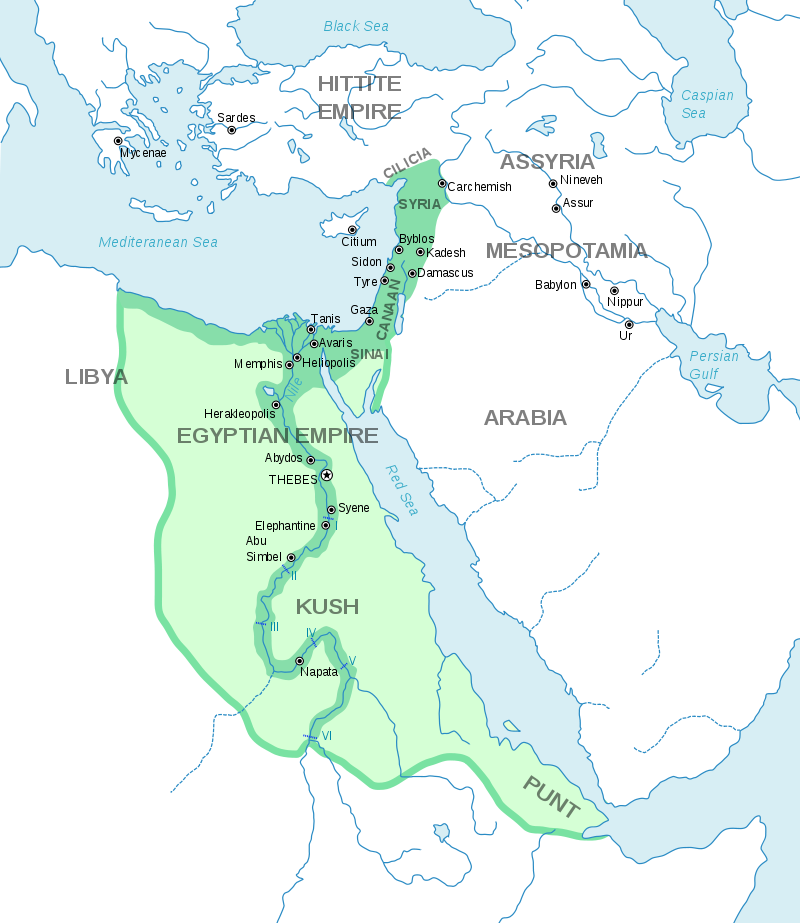
(Map obtained for educational use from American Bible Study at AmericanBible.org)

And so the Harri were expelled from the lands of the Mitanni for the crimes of conspiracy (to overthrow their previous unjust king) and attempted to settle within the lands of Babylonia. However, the king of Babylon, having just lost in battle to and not wishing to anger Assyria further, captured these fugitives at once, seizing all that the Harri owned, which included two hundred chariots, in the case that it might garner favor or praise.

While the newly crowned king of Mitanni, Shuttarna III, carried out every effort to rebuild his fallen kingdom, one harsh reality remained: His people were starving.

It was at that moment when the Hittites seized the day, as their king, Shubbiluliuma, rationalized that a weaker king at the head of the Mitanni would prove a better ally than the stronger leader that was beginning to emerge. First, he fed their starving populace to gain support. Next, he led his armies into the lands of the Mitanni, defeating Shuttarna's inferior force on the battlefield, before driving out any Assyrian and Alshe forces poaching on the lands. He then installed Mattiuaza to the throne. This was the same Mattiuaza that the Harri once tried to replace Artatami II with.

As a price for his efforts, the Hittite king presented conditions in which the newly crowned king of the Mitanni, Mattiuaza, took his daughter in a royal marriage, thusly joining their houses. This was a play that the Egyptians failed to secure with the Hittites earlier that could have prevented a fatal enemy.

Throughout the 1350s and beyond, the Near East was rapidly changing:

  • In 1352 B.C. Egypt's pharaoh died. By the time of his passing, all of Syria and Palestine had broken free. 
  • Once driving the Assyrians and her allies from Mitanni lands, King Shubbiluliuma secured successor plans for his two sons, Murshil II and Arnuwandash II, both young men with fiery blood, who were honored with important tasks in service to the Hittite state.
  • Murshil traveled to the former Amorite lands within Syria and with aid of the local Ammuru, thwarted an attempted coup, and restored order to the local region just south of Aleppo, placing it within Hittite control.
  • While Assyria's pride been harmed in their desperate retreat, their physical wounds and casualties were minimal. With the Kassites of Babylon still cooed to friendly relations, on the heels of their embarrassing defeat on the Tigris, Assyria turned its eyes eastward, and to the direction of Elam.
Egypt's children had broken free and the once peaceful polity degenerated into warring nations battling for supremacy.

Friday, October 20, 2023

Ancient History - Part 9: Sins of the Father


The window of opportunity opened to Assyria. With the kingdom of the Mitanni in ruin, the northwest lands were split between Assyria itself, and a newer emerging small kingdom, Alshe. The time of Ashur-uballit had passed, and as his heir, the new Assyrian king, Enlil-nirari (1368-1346), finished securing the borders and made a surprising move, turning south toward the Kassites. Specifically, Babylon.

Everyone in the Near East viewed Assyria and Babylon as staunch allies, forged by brotherhood and bound by the blood stemming from king Ashur-uballit's loins. In spite of all pretense, Enlil-niari led his expedition against Kurigalzu III until the two armies met in an engagement along the Tigris River, specifically near the site of Sugagi. A significant battle took place, which resulted in king Kurigalzu III's forces being routed and the boundary lines between the two countries to shift in favor of Assyria gaining more lands.

King Enlil-niari's successful exploit was forever etched in time:

  1. In the Old Testament, the Battle of Sugagi is directly referenced in both Books of Chronicles.
  2. A boundary stone (kudurru) recovered in Susa (eastern Iran) still exists today that references this war.
  3. A traditional heroic inscription scribed into cuneiform, during the time of his grand-children, commemorated this victory for Assyria. Translation: 'Enlil-nirari . . . destroyed the army of Kassites . . . overcame. . . his enemies . . . enlarged boundary and border.'  
Meanwhile, the new king of the weakened Mitanni, Artatama II, welcomed peaceful relations with Assyria. Yet, a new growing faction within Mitanni borders, the Harri people, wished to replace their king with a younger son (Mattiuaza) of the beloved Tushratta, the former king (slain by Artatama II's own hands). Artatama II accomplished little during his reign, other than to push back against the support of these rebellious sentiments, always worried that someone may stab him in the back, and overthrow him for his throne. Justice comes in many forms and perhaps this was a form of punishment in of itself, the price for his cursed prize: That the very act of murdering his elder brother and father for power, would haunt him until his dying day, and be all he'd be remembered.

Once he'd passed, Artatama II's son, Shuttarna III, did not wish to pay for the sins of the father. His first act was to secure strong peaceful relations with the Mitanni's neighbors once again, so he returned the legendary gate (doors of silver and gold) to Assyria that had been stolen during the days of Shaushshatar. The Harri, on the other hand, he dealt with harshly, driving them out of Mitanni lands, and into the lands of Babylon.

Tuesday, October 17, 2023

Ancient History - Part 8: The Boy Who Would Be King


Kurigalzu III, a child by modern day approximations, managed to escape unharmed during two subsequent revolts which changed the hands of the Babylonian throne. First, by those who overthrew and killed Kadashman-Kharbe, followed by his great-grandfather's retribution, in slaying those very same revolutionaries, and being responsible for placing the seat into his hands. With the king of Assyria's support, the child-king ascended to rulership without resistance.

King Kurigalzu III of Babylon led a campaign against Elam, for reasons unknown. There is no record to admit Elam's hand in the revolts ever taking place, and yet the Kassites attacked king Khurbatilla's lands all the same. This war effort was such a success that by its end, Kurigalzu III's forces had managed to capture the king of Elam, Khurbatilla, as prisoner, before enjoying the rich spoils that followed.

However, instead of returning home as a celebrated conqueror on the cries of victory, Babylon's young king was met by grave tidings which infected the Near East like an overnight plague. The Asiatic provinces of Egypt were seething with anger. Open revolts by several localized populaces led governors of their respective region to plead to king Ikhnaton to send reinforcements to fight back against open rebellion. The Egyptian king, nearing the end of his reign, continued to turn a deaf ear, and one-by-one the empire of the Nile's dominion fell into turmoil.

Simultaneously, as Egypt's decadence spiraled into a fall from grace, the Hittite nation of the north rose. Ruled by king Shubbiluliuma, the Hittite king (1411-1359), and his people were bound by peace treaties (made by his predecessors) to Egypt during this period, but not by intermarriage as was oftimes customary between royal houses. This meant that their peace was based on a promise. . . Bound by words, not blood. And so the Hittite king waited patiently. It was said that as Syria revolted against Egypt, he smiled. Though this pleasure was short-lived due to an unforeseen interference: The Mitanni.

While Egypt declined to reinforce her territories, its ally in the Mitanni did in fact arrive, in a valiant attempt to stem the violence with order. The key to the entire uprising was a small strategic point on the Phoenician Coast, Simyra, and king Tushratta (1399-1360) of the Mitanni led a counter-attack against it. Even though unsuccessful, king Shubbiluliuma's displeasure at the Mitanni's aid, in trying to revitalize the power of their Egyptian overlords, revealed his true intentions all along.

The Hittites then invaded the Mitanni, Egypt's only saving grace amidst the chaos. The neighboring lands between their nations (Ishuwa) now shifted ownership to the Hittites. As Tushratta retreated with his forces back to safety, yet another uprising took place, where he was killed by his own son, Artatama1.

While the west raged in wildfire and blood, the untouched region of the east, remained in question. How would Assyria and Babylon, now united and ruled by the same blood of king Ashur-uballit, respond to this storm?

  1. ARATAMA NOT ONLY MURDERED HIS FATHER, BUT ONCE THE DUST HAD SETTLED AND THE SMOKE HAD CLEARED, IT WAS THEREAFTER REVEALED THAT HE ALSO CARRIED OUT THE SAME CRUEL FATE TO HIS ELDER BROTHER.

Wednesday, October 11, 2023

Ancient History - Part 7: The Old Man's War


Following what was assumed to be Egypt's concessions to both Assyria and Babylon (in gold talents), the king of Babylon shifted gears. Instead of harboring further open resentment towards his rival, he arranged a marriage between Assyria and his own kingdom - In the form of the Assyrian princess Muballitat-sherua, daughter of Ashur-uballit, and his son Kara-khardash.

This marriage had an unintended aftereffect, as their half-Assyrian, half-Kassite firstborn son, Kadashman-Kharbe (1369-1368 B.C.) inherited the Babylonian throne with a focus upon Assyria's well-being as much as Babylon's. He set out to subdue the Bedouin tribes, particularly the Suti, who had plagued the road from Egypt to Assyria, an issue stemming from his mother's time. After successfully driving them far into the deserts, he ordered fortifications to be constructed along the road, guarding against future incursions from any nomadic peoples. 

But what began as a promising start for a new leader, resulted in a short reign, for a sudden civil war broke out in Babylonia, in which Kasdashman-Kharbe was killed.

There are a few theories for why this occurred: 

  1. Kadashman-Kharbe's queen-mother was never popular and he thus acquired both her unpopularity along with her Assyrian sensibilities (his harsh actions against the Suti evidence of this).
  2. Egypt was losing control over Palestine and Syria. The vast empire of the Nile had undergone a transformation once its pharaoh, Amenhotep IV, renamed himself 'Ikhnaton', living god of the sun, and turned his attentions internally, by first forbidding the worship of numerous deities of Egypt's pantheon. This new era, known as the Amarna Period, echoed into the Near East, who no longer wished to emulate the once proud and powerful empire, and began to seek independence from its waning influence. Babylon had a tendency to copy and Egyptianize their kingdom and perhaps this revolution was a cultural backlash to this multigenerational trend.
  3. Lastly, there are those who believe an anti-Assyrian party responsible for fanning the seeds of discontent for many years, that this person or persons or network secretly supported the Suti's efforts in harassing Assyrian travelers on the road, and when the time arrived to remove an unwelcome half-breed from their throne, the knife was firmly twisted, with their former ruler anything but sorely missed.
Ashur-uballit, now a man of venerable age, still sat upon the Assyrian throne, and nothing dissuaded him from quickly announcing in an open declaration, his vow, seeking justice for his grandson's murder. The old king himself led an army into Babylon, who following the transition of their violent coup, was taken completely unawares, and in their unreadiness, Assyria overthrew those who had taken power. The usurper was killed (records conflict if the leader responsible for Kadashman-Karbe's demise was Shuzigash or Nazibugash) and the Assyrian king placed the kingdom of Babylon into the hands of his great-grandson Kurigalzu III.

If the Kassites believed that the Suti would come to their aid . . . They were quite mistaken.

Saturday, September 23, 2023

Ancient History - Part 6: Aggressive Negotiations


Following the brief but successful era of Amenhotep III's polity, a changing of the guard swept the Near East. Egypt was now ruled by Amenhotep IV. Burna-Buriash II (1395-1371) now seated Babylon's throne as its Kassite king. But it was in 1386 B.C., that the Assyrian king, Ashur-nadin-akhi, departed from this world and was succeeded by Ashur-uballit (1386-1369), triggering a new event. Following his ascension to the throne, Assyria's new ruler quickly marshalled his forces to subdue two newly risen kingdoms on the northern borderlands: Shubari and Musri.

Even the price of a successful military campaign can reach unfathomable heights. The remnants of cuneiform tablets have preserved the letters between Assyria and Egypt, letters in which Ashur-uabllit requested twenty talents of gold from Egypt's pharaoh. This was the precise amount his predecessor had been gifted by Egypt for the reconstruction of their palace and temples a mere decade earlier.

Meanwhile, the king of Babylon, Burna-Buriash II, played his own game, going to great lengths to sweeten relations between the lands of Egypt and his own. He'd already orchestrated his son's marriage to Amenhotep IV's daughter, both staying together in Egypt, to enjoy the lavish lifestyle bestowed upon those within the pharaoh's immediate household. Since his son's union, the king of Babylon continued to make grand gestures, any effort to keep the bind of that friendship taut.

Burna-Buriash II's latest endeavor saw him travel from Babylon to the Nile, in order to present his daughter-in-law a gift. A beautiful necklet of 1048 beads. His reason (or excuse) for personally transporting it was that with so many beads, he trusted no other man with the responsibility of keeping it fully intact for the entirety of the journey. Once he'd arrived to treat with the Egyptian royals, he witnessed the Assyrian messenger's appearance in court to announce his kingdom's request for gold.

The Kassite king of Babylon was significantly displeased. Should the pharaoh of Egypt grant such an extravagant boon, Assyria might then be viewed as the most favored nation in the eyes of the Near East. Many historians have interpreted Burna-Bruiash II's extreme caution as a "jealous fear". In a bitter refusal to simply allow Assyria to gain itself a pre-eminence with Egypt, Babylon protested Assyria's appeal for gold to fund its conquests.

Later, in other letters of cuneiform tablets, the Kassite king wrote to Amenhotep IV, that should Assyria be granted twenty gold talents, then Babylon should be granted twenty gold talents, for at the time his people were building a new temple in their city of Nippur.

We do not know whether Egypt granted either Assyria or Babylon its requests for gold, though there is little evidence to suggest otherwise. Both kingdoms were favored subjects and Egypt was still known to be quite wealthy during this period. The important thing of note is not Egypt's compliances to these demands but to recognize the growing unease and distrust as the lesser kingdoms squabbled to remain the favorite loyalist of Egypt. 

The example given demonstrates how an honest request from one large group of people within a border, for gold, might offend another, that has little to nothing to do with such a transaction to begin with.

One might surmise that the attitudes of Egypt's subjects had reduced them to a resemblance of dogs, each vying to outdo the other, in competition for its master's attention.

Sunday, September 10, 2023

Ancient History - Part 5: A Polity Is Formed


With relative peace with its new allies, the New Kingdom of Egypt's military forces could now focus on two enemies, the threat of the Hittites on the outside and the Semitic people's rebellious spirit from within. No longer were the roads of Palestine war-torn and unsafe, on the contrary, it had become the crossroads of kings, as their queens, princes, princesses, and advisors, with their hundreds of maidens traveled upon it to carry out their stately business. The air was now filled with diplomatic harmony, for Egypt had successfully created a polity of several states for the first time in recorded history.

Egyptian king, Amenhotep III, did much to please his allies:

  • In the case of the Babylon, Kadashman-Enlil I's sister and daughter, traveled to Egypt and joined the royal harem. The warm treatment toward both well-beloved women dispelled any remaining concerns the Kassite ruler may have held from the past, any looming threats of invasion, all provably unfounded. With their acceptance into the royal harem, Babylon was gifted with influence, not dissimilar in the manner that Thutmose IV performed in marrying the daughter of the Mitanni king, Artatama I, only a decade prior. Babylon now entrusted the safety of its kingdom within the hands of Egypt.
  • In the tenth year of his rule (1401) Amenhotep III renewed his alliance with the Mitanni by marrying their princess, Gilukhipa, daughter of Shuttarna, her family crossing the roads of Palestine into Egypt, to present a dowry worthy of legend.
  • Demonstrating this custom of intermarriage to secure peace, Amenhotep III gave away his own daughter to an emerging small-state in the north-west: Arzawa (modern day Turkey; spec. Western Anatolia).
  • Assyria did not bask in royal marriage during this time, but was far from forgotten. Knowing that its king, Ashur-nadin-akhi (1396), was building a palace in Ashur, Amenhotep III sent twenty talents of gold to decorate its walls. Assyria in turn, occupied itself in productive endeavors, its people benefiting from constructing new wells, dwellings, and a great new temple.
These were relatively peaceful times. However, history would begin to speak a universal truth, a truth not restricted to this era: One generation's success does not guarantee the next to be worthy enough to resume the duties of carrying on the work of their forebears' legacy.

Nothing lasts forever. With new players come renewed appetites flamed by greed, jealousy, and an unsatisfied lust for power. And little did any know ... war was once again on the horizon of the Near East.

Sunday, September 3, 2023

Ancient History - Part 4: Uneasy Peace


Despite peaceful relations with Assyria and Babylon, Egypt mounted a continuous Palestinian campaign. Under the rule of Amenhotep II (1447-1420), the empire of the Nile quelled any civil unrest, amongst the rebellious Semitic people, before moving its armies back into the lands of Syria. While this march was no more than a nominal success, the Mitanni (the westward neighboring state to Assyria) suffered great losses which resulted in a significant displacement of their power and people. So much harm did the Mitanni sustain, that it left them in no other position than to plead for the mercy of Ra's chosen people.

Amenhotep II's successor, Thutmose IV (1420-1411), believed that if the Mitanni could be cooed into friendly terms, much like Babylon and Assyria, there was untapped potential in securing a third subordinate ally. Therein lay the predicament: The king of the Mitanni, Artatama I, was already fiercely befriended and trusted by the Hittites, the chief rival of Egypt. Even though by mid-15th century B.C., war between the Egyptians and the Hittites had been generally reduced to mild skirmishes (upon Syrian soil), tensions continued to boil, and each passing day both sides expected grand-scale battle to resume.

The Egyptian king thusly proposed a royal marriage between kingdoms. Thutmose IV would marry Artatama's daughter, a symbol of protection, one that accompanied the trust that Egypt would harbor no further attack upon the Mitanni any longer, but such a promise would warrant a step even further. Egypt allowed the Mitanni to enter the fold of its vision. With a single marriage, a shockwave rumbled throughout the Near East. The Mitanni's allegiance officially shifted from the Hittites to the Egyptians.

This new development did not rest easily with the two nations of Assyria (ruled by Ashur-bel-nisheshu) and Babylon (ruled by Kara-indash). Unlike his predecessors, for Thutmose IV, the Mitanni were now quickly becoming the Egyptian king's his favored state, or so it appeared.

The two rulers east of the Euphrates agreed upon one thing: Despite any ill-bearing or mistrust they'd once harbored for the other, it must all be set aside, in order to form a united defensive front, should any attack, no matter whom the would-be conquerors be, be led. 

Assyria began refortifying its towns and their city of Ashur, strictly insuring that no weak points existed amongst the battlements. Meanwhile, the Kassites of Babylon were in a state of constant patrol along the borders. 

However, these expectations of a pending defensive war were all for not. Thutmose IV passed away (1411) and his successor, Amenhotep III (1411-1375), immediately sent envoys to treat with Babylon and Assyria. This new king made his intentions well-known; he possessed no desire to expand into the northern mountains of Assyria nor the vast lands eastward into Babylon. He'd admired their nations as loyal subjects and wished to maintain a focus wholly upon the true sources of Egypt's discontent, the unending Palestinian and Syrian wars, respectively.

Amenhotep III's assurances did not go unchallenged by both Ashur-bel-nisheshu and Kara-indash, and when pressed for further explanation, he convinced them that the Egyptian people were a culture well-conditioned to the dry lands of the desert heat. They were not groomed for a cold wintry life in the mountains, pacifying the argument justifying Assyria's fear of the Egyptians as would-be conquerors of their land. When it came to Babylon, Amenhotep stated that the Euphrates River was an unmistakable natural boundary, and officially declared that Egypt would never expand beyond it.

At the conclusions of these entreaties, all sides departed. Satisfied.